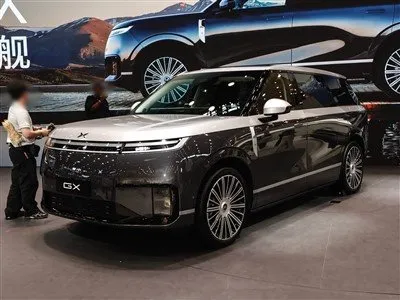
As the Munich International Motor Show draws to a close, Chinese auto brands have left a deep mark in the local media's coverage. As BYD's promotional video mentioned, "Ten years ago, few people would have thought that new energy vehicles would become the mainstream of the market. Five years ago, few people would also have thought that China would become the number one country for auto exports."
In the first quarter of this year, China's auto exports officially surpassed Japan's, becoming the world's top auto exporter. Both the China Association of Automobile Manufacturers (CAAM) and the Passenger Association (PAA) expect China's auto exports to exceed 4 million units in 2023, of which new energy vehicles will steadily exceed 1 million units. Undoubtedly, this is a special time for the global market to witness the continuous rise of China's auto industry.
According to UBS forecasts, by 2030, the share of Chinese auto brands in the global market will grow from the current 17 per cent to about 33 per cent, almost doubling; in the local market, Chinese brands are expected to take 80 per cent of the market share. This figure is much higher than the industry's average measured level.
However, some people may question how much of the real competitiveness of China's auto industry has been catalysed by the "overtaking" and "going overseas" sound waves. Moreover, the brand to go to sea to a certain extent means that the R & D, industrial chain relocation, talent and resource division. Then compared with the "aborigines", Chinese automakers will have the advantage of where?
Price is not the only advantage
Undeniably, China's new energy automobile industry has achieved a stage of victory, inseparable from the price to guide the advantage.
From the point of view of the consumption of new energy vehicle market, 150,000 ~ 200,000 yuan is still the main consumption range, accounting for about 40%. With 300,000 yuan as the dividing line, we can also see that the downward market size is a bit larger, thus for a long time in the past, the national subsidy slopes back, Tesla started the price war on the one hand, squeezing the profit space of the car companies, on the other hand, forcing the supply chain to carry out the strategy of cost reduction to the end.
The world's most intense price war is happening here, but sometimes there are exceptions. The recent UBS dismantling of the BYD Seal shows that the Seal costs about 15 per cent less than the same class of Model 3 at Tesla's Shanghai factory. Compared to the same type of car produced by Volkswagen in its European factories, it is anywhere from 35 per cent lower.
To talk about cost reduction in the automotive industry, Tesla is a typical textbook. 2022 Model 3 cost per car has been reduced by 30% compared to the previous year, the same year Tesla's gross profit margin per car reached 28.5%, BYD is 20.39%. Roughly, at a cost of $20,000, the BYD Seal saves $3,000 over that.
As for the difference in gross profit margin between the two, it may be caused by other costs and inputs. But on the other hand, there are also views that BYD's success today is more dependent on the cost-effectiveness of its brand and China's huge consumer market base. Just like the previous "fuel tank door" incident, public opinion bluntly accused BYD of making safety sacrifices in order to save money.
Is it true that Chinese brands must use cheaper parts? This biased view has always existed in the development of China's auto industry. Like the question of whether "Made in China" has shed its low-end label, I believe the answer will put many people in a difficult position.
What is clear is that China's manufacturing is moving towards the middle and high end of the global value chain. After all, low-priced competition can't create a world-class auto brand. A month ago, BYD reached the production milestone of 5 million new energy vehicles. Just this past 6 September, Tesla's 2 millionth vehicle from its Shanghai Super Factory also officially rolled off the production line.
If the delivery volume represents consumers' affirmation of a certain car brand, then the production volume, in addition to proving production capacity, is the most indicative of the results of the market's choice over time. In the final analysis, it's not just about external cost advantages such as manpower and raw materials.
"In addition to the factor costs of production in China, the vertical integration of the supply chain, the high degree of integration, and the continuous iteration of technology are all important reasons why BYD has been able to achieve a cost advantage." Gong Min, Head of China Automotive Industry Research at UBS, pointed out that only cost advantages achieved through technology can be maintained and sustained outside of China.
Even if they go to Europe to manufacture, it's the same.
BYD and Tesla share a similar development logic.
Taking Tesla as an example, the 6,000-tonne giant die-casting machine used in its Shanghai factory achieves integrated moulding of the entire rear bottom plate by injecting high-temperature aluminium liquid into the mould, integrating more than 70 welded parts into one. On the 2022 Model Y, the technology not only reduces weight by 30 per cent, but also cuts manufacturing costs by 40 per cent.
Combined with the optimisation of production lines and processes, it takes Tesla's Shanghai factory less than 40 seconds to take a complete car off the line. Of course, when it comes back to cost control, the biggest contributor has to be the vertical integration capability. Tesla has developed its own FSD chips, batteries, motors, ECUs, algorithms and electrical and electronic architecture. BYD is not far behind in this regard.
BYD chairman Wang Chuanfu once said, "We build everything in a car other than glass, tyres and steel plates." In addition to power semiconductors, BYD has become self-sufficient in major components such as power batteries and motors. For example, the Seal is equipped with its self-developed "eight-in-one" electric drive system, which can save about 20 per cent of the cost compared to a scattered box.
In 2020, BYD packaged these businesses to form Fudi System. UBS's teardown report shows that BYD Seal produces about 75 per cent of its components in-house. "The ratio of parts being made in-house is higher than Tesla making them in the US or China or Volkswagen making them in Germany." Kung Min said as follows.
Including tariffs and shipping costs, Corsair is still quite competitive in the European market. Even if Corsair adopts local production in Europe in the future, it is still about 1/4 of the cost cheaper than the models produced in Europe by existing western car companies.
Indeed, vertical integration of the supply chain is only a prerequisite. As Musk argues, over time, all car companies can make long-range electric cars, as well as self-driving cars. More than these, Tesla's moat should be its strong engineering capabilities.
Some analyses pointed out that "Engineering-First" makes Tesla's innovations in the field of battery, vehicle manufacturing, and self-driving cars can be quickly realised. Gong Min also bluntly said that the integration of engineering research and development above Corsair is actually more significant than which parts BYD has produced, which parts it has produced again, or which money it has made again.
Initially Japanese carmakers have risen rapidly globally by virtue of their price advantage, but today, Chinese car brands represented by BYD are practising a deeper level of cost advantage. Including in terms of electrical and electronic architecture, the Corsair has a trend towards central integration that is markedly different from previous models. In addition to saving ECU usage, a more integrated electronic and electrical architecture is also the basis for automakers to stay ahead of the curve in terms of intelligence. At present, domestic car companies have launched their own research.
At the beginning of August, Zero Run launched a fully self-research "four-leaf clover" central integrated E/E architecture, with a SoC chip + 1 MCU chip to achieve central supercomputing. In addition, Xiaopeng X-EEA3.0 and Guangqi EEAN Starling Architecture have also entered the stage of "central supercomputing + regional control". The research and development of Great Wall GEEP5 and SAIC Zero Beam Galaxy 3.0 architectures are also progressing methodically.
From the point of view of the architecture itself, its main significance is to realise software-defined automobiles. To some extent, this is where Chinese auto brands have an advantage. Why else would Volkswagen choose Xiaopeng, and why would Chinese brands dare to face BBA directly in their German base camp.
Going to the sea: it's better to run and jump than to be lazy
It can be said that the chip shortage has added unprecedented uncertainty to the global car market, but at the same time it has also become a catalyst for China's auto industry to accelerate overseas. In 2022, for example, 16 per cent of electric cars sold in Europe will be imported from China.
Luca de Meo, Renault's chief executive, recently said, "Chinese carmakers are very competitive in the EV value chain, they are a generation ahead of us and we need to catch up." However, some automotive industry sources believe that China's auto industry's ability to look at the world, but not too much "self-importance".
Overall have the ability, but this ability has not yet broken out of Asia, to the world. According to Gu Hongdi, vice chairman and co-president of Xiaopeng Auto, the German automaker has shown "the strongest determination to change ever". This attitude should not be taken lightly.
In the case of the European market, the market share that Chinese carmakers have been able to capture is concentrated in the 20,000-30,000 and 30,000-40,000 euro price ranges. In other words, Chinese auto brands use the price advantage to develop the European market, the impact on the local mass market (Mass market) is greater; on the contrary, in the higher-end market, consumer choice is actually relatively conservative.
Therefore, UBS predicts that the share of Chinese car companies in the European market is expected to increase from 3% in 2022 to 20% in 2030. At that time, the European auto market will occupy about 20% of the global market share.
Now, Chinese automakers "brand up" strategy continues to speed up. Azalea, Xiaopeng, SAIC, etc. to speed up the development of the European market. And Dongfeng's Mastodon 917, BYD's U8 and other high-end new energy products have also been unveiled one after another. The Crew Association believes that the high-end market above 300,000 yuan will maintain high growth in the future due to the influence of the trend of replacement and consumption upgrading.
As for how to realise the high-end of products going overseas, it will be the next important topic. Li Xueyu, General Manager of Jetway, believes that car companies should not only master the technology and industrial chain advantages, but also make a good long-term layout in the market, especially the overseas market. To sum up, it is to export brand ecology and compete in the whole value chain.
At present, China has become the world's new energy vehicle industry chain is the most complete country, mastering the core technology, but also the first consumer country. But going to sea means that the internationalisation of products, technology, standards, talents, capital, services and other aspects of the output, the industry chain to be transferred or not? Should the industrial chain be transferred? Should the R&D be overseas? Where to choose? All are problems. It is foreseeable that this process will be quite long.
But as Wang Chuanfu said, having a world-class brand is an important symbol of a strong auto country. The United States has GM, Ford, Tesla; Germany has Volkswagen, Mercedes-Benz, BMW; Japan and South Korea also have their own world-class brands; while China has not yet a widely recognised world-class brand.
In this era full of proof questions, China's new energy automotive industry should not only continue to lead in the race of the tortoise and the hare, but also trip out a road of its own. "I believe that the era belonging to Chinese automobiles has come, and China is bound to give birth to a number of world-class brands." We also walk and watch. (Gaijin Automobile Xu Shanshan)