The Rules Changed. Here's What That Means for You.
If you've been sitting on the fence about importing from China, 2026 is the year the fence got a lot more comfortable. The chaotic gray-market days are mostly over. Here's the short version: China now requires an export license for pure electric passenger vehicles, and the days of sketchy middlemen moving cars through side channels are pretty much done.
That's actually good news if you're a serious buyer.
What Actually Changed in 2026
Let me break this down without the usual policy jargon.
Starting January 1, 2026, any pure electric passenger vehicle-that's HS code 8703801090 for those keeping score-needs an export license to leave China. The license isn't something any trading company can just apply for. You need brand authorization from the manufacturer. That single requirement wiped out a whole tier of small-time exporters who were basically running a numbers game with zero accountability.
There's also the 180-day rule. If a vehicle is exported as "used" before it's been registered for 180 days, the exporter needs an after-sales service confirmation letter from the original manufacturer. For parallel exporters, that letter might as well not exist. They can't get it.
So what does this mean for you? Your supplier either has manufacturer authorization or they don't. If they don't, they can't legally export EVs anymore. It's binary.
Here's the part most buyers haven't caught up with yet. On October 12, 2026, China's Ministry of Finance announced that the VAT export rebate for new energy vehicles will drop from 13% to 9% starting April 1, 2027-9. That 4-point difference translates to roughly RMB 6,000 per vehicle on a typical export unit. Exporters will handle it somehow-price adjustments, margin compression, or passing it down the chain. If you're planning a purchase that crosses that April deadline, get the pricing mechanism in writing before you sign anything.
The window between now and April 2027? That's when you have maximum negotiating leverage. Exporters want to lock in shipments at the old rebate rate. Use that.
Reading a Quote Without Getting Fooled
Most quotes you'll see come in two flavors: FOB and CIF.
FOB means the seller gets the car to the port and handles export customs. After that, it's your problem. CIF adds ocean freight and insurance on top. For a first-time buyer, CIF is usually the smarter play-you're paying a bit more, but someone else is dealing with the shipping company when things go sideways. And they do go sideways.
What I'd avoid entirely is DDP. It sounds convenient-"we'll handle everything including import duties"- but you're handing over control of your import taxes to someone whose incentives don't align with yours. If your country changes its tariff structure next quarter, you're the one eating the difference.
The Real Cost Isn't the Sticker Price
Here's a number that surprises people: a car with a CIF price of $15,000 can land at $22,000-$24,000 in South Africa after duty, VAT, port charges, and registration-48. That's not a typo.
The math looks different depending on where you're importing. UAE charges 5% duty and 5% VAT. Brazil jumped to 35% on fully assembled vehicles. Thailand's EV import tax situation got messier in 2026 after incentive programs were scaled back.
Before you get emotionally attached to a particular model, run the landed cost calculation. If you don't know the VAT rate and import duty in your market, stop and find out. I've seen buyers commit to a car and then discover the tax bill ate their entire margin.
Shipping: The Bottleneck Nobody Talks About
Roll-on/roll-off ships are the workhorse of Chinese auto exports. They're cost-effective and reliable for volume shipments. But here's the thing - Ro-Ro capacity is tight. Really tight. All the dedicated Ro-Ro berths at Shanghai's Nangang Terminal for the entire 2026 calendar year were booked out by early January-. Charter rates for Ro-Ro vessels jumped 65% year over year.
If you're planning a shipment around the April 2027 rebate deadline, book your slot months in advance. I'm not exaggerating. Waiting until February to arrange March shipping is a recipe for watching your cargo miss the cutoff.
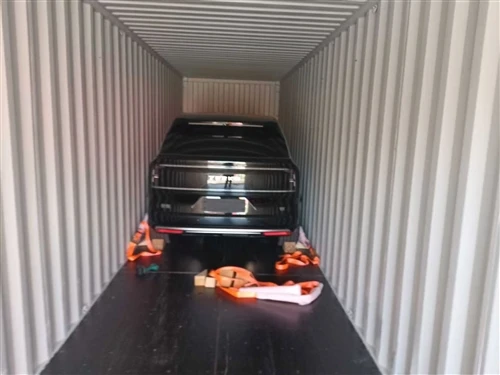
For smaller orders-one to three units-containers work fine and give you more scheduling flexibility. You pay a bit more per unit, but you're not competing for scarce Ro-Ro space.
Five Things to Check Before You Wire Any Money
- Ask for the export license. Not a promise that they have one. The actual document. If the supplier hedges, that's your answer.
- Get the VIN before you pay. A legitimate exporter will give you the full VIN so you can verify the vehicle exists, check its specs, and confirm it's not a demo unit or a re-registered car.
- Ask about destination market certification. If you need GCC certification for the Gulf, that's a 6-to-10-month process costing RMB 350,000 to 550,000 per model-. Your exporter should either have it or have a clear plan to get it. "We'll figure it out" is not a plan.
- Confirm the HS code. Wrong HS codes are the number one cause of customs delays. If your supplier can't tell you the exact code for the vehicle you're buying, that's a red flag.
- Understand the after-sales situation. The 180-day rule isn't just about export licensing - it's a signal about whether your supplier has genuine manufacturer backing. If they can produce the after-sales service confirmation, they're legit. If they can't, walk away.

The Bottom Line
The 2026 rule changes did two things: they made life harder for bad actors and easier for serious buyers. If you're sourcing through a brand-authorized exporter, you're operating in a cleaner market than existed two years ago. The vehicles are real, the paperwork is real, and the pricing is transparent enough to negotiate on.
The clock is ticking on the rebate window, though. April 2027 sounds far away until you factor in certification timelines, shipping schedules, and the fact that everyone else is thinking about the same deadline. Start the conversation now, not in March.
FAQ
Q: What changed for Chinese EV exports starting January 1, 2026?
A: Pure electric passenger vehicles under HS code 8703801090 now require an export license. The exporter must hold brand authorization from the manufacturer. Without that authorization, a trading company cannot legally export EVs from China.
Q: How does the 180-day rule affect new vehicle imports?
A: The 180-day rule applies to vehicles exported as used before being registered for 180 days. Those vehicles need an after-sales service confirmation letter from the original manufacturer. New, unregistered vehicles exported through a brand-authorized channel do not trigger this requirement.
Q: What is the difference between FOB and CIF when importing from China?
A: FOB means the seller delivers the vehicle to the port and handles export customs. CIF adds ocean freight and insurance on top. For first-time buyers, CIF is usually simpler because the exporter manages shipping and insurance.
Q: How much does the VAT export rebate change affect pricing?
A: The rebate for new energy vehicles drops from 13% to 9% on April 1, 2027. On a typical export unit, that equals roughly RMB 6,000 less rebate per vehicle. Exporters may adjust prices by 2% to 4% after the deadline.
Q: What should I check before wiring money to an exporter?
A: Ask for the actual export license, not a promise. Get the full VIN before payment. Confirm the HS code and the destination market certification plan. Also verify that the exporter can provide after-sales service confirmation if needed.
Q: How tight is Ro-Ro shipping capacity for Chinese car exports?
A: Ro-Ro capacity is very tight. Dedicated berths at major Chinese ports were booked out for 2026 by early January. Charter rates for Ro-Ro vessels jumped 65% year over year. Book your slot months in advance, especially if you are targeting the April 2027 rebate deadline.