The RHD Problem Nobody Solved Until Now
About a third of the world's car markets drive on the left side of the road. UK, Australia, South Africa, Thailand, Malaysia, Kenya, Jamaica the list runs long. And for years, if you wanted a Chinese EV in any of those markets, you had two options: pay a premium for the handful of factory RHD models available, or buy a converted vehicle and pray the steering geometry held up.
The conversion route is sketchy. A proper RHD conversion isn't just moving the steering wheel. It involves repositioning the steering rack, relocating the brake master cylinder, recalibrating the electric power steering, and revalidating the crash structure. Under China's 2026 MIIT export standards, all RHD converted EVs must go through licensed facilities with OEM approved component kits and full traceability for UN ECE R100 battery safety compliance 23. The informal conversion shops? They're done.
That's why factory original RHD is the only category worth considering in 2026.


Why Kenya Just Became More Interesting
Kenya enforced its eight year vehicle age limit starting January 1, 2026. Only RHD vehicles first registered from 2019 onward are allowed in. For used car importers, this cut the available pool dramatically. But for new RHD EVs, it opened a door.
Kenya also introduced a duty free policy for the first 100,000 electric vehicles imported into the country. Combined with the RHD only rule, this means Chinese factory RHD EVs are basically tailor made for the Kenyan market right now.
The catch is the Kenya Bureau of Standards (KEBS) certification. Every model needs KS 1515 compliance before it can be registered. If your exporter hasn't started the KEBS process, add three to four months to your timeline.
South Africa: The Gold Standard for RHD EV Imports
South Africa has become the proving ground for Chinese RHD EVs. There are three gates you need to pass through, and you need to pass all three before the car is legally on the road.
Gate one is ITAC the International Trade Administration Commission. Used vehicles face tight controls. New vehicles are more straightforward but you still need to confirm the import permit situation.
Gate two is NRCS. The National Regulator for Compulsory Specifications requires a Letter of Authority (LOA) or type approval. No NRCS approval means no customs clearance. It's that simple.
Gate three is NATIS. If the model isn't recognized in the National Traffic Information System, registration stalls. And once registration stalls, you're paying port storage fees while you wait for the manufacturer to provide extra documentation.
The tax picture: 25% import duty on non EU EVs, 15% VAT, plus ad valorem duty and port charges. A CIF price of $15,000 typically balloons to $22,000-$24,000 by the time it's road ready 48.
One more thing check the charging plug type before you ship. South Africa uses IEC 62196 Type 2. If the vehicle has a different connector, you're looking at adapter costs or worse, a car you can't charge 48.
Tanzania and Jamaica: The Next Frontier
Tanzania requires RHD for practical road use. Import duty runs 25% on CIF, plus excise (10% for engines under 2000cc, 20% above), plus 18% VAT compounded on top. Total tax burden typically lands between 60% and 95% of CIF value. EVs get a break on duty 0% to 10% depending on the model year which makes the math more favorable than for combustion vehicles.
Jamaica is stricter on vehicle age but looser on just about everything else. RHD is mandatory left-hand drive vehicles cannot be registered except for diplomatic exemptions. The BSJ requires pre shipment certification. The total tax load runs 80% to 150% of CIF depending on engine size. But there's no permit system and no preshipment inspection requirement beyond BSJ compliance. For a small volume importer testing the market, Jamaica is actually one of the simpler RHD markets to enter.
What Actually Matters When Choosing a Model
Range matters less than you think. In Kenya and Tanzania, daily driving distances are shorter than in Europe or the US. A 300km range is plenty for city use and regional trips. What matters more is DC fast charging capability, because the charging infrastructure in these markets is still thin and you want to minimize downtime.
Ground clearance is another factor nobody talks about. Road conditions in parts of East Africa and the Caribbean aren't great. A low-slung hatchback will scrape. Something with a bit more clearance will save you a lot of undercarriage repairs.
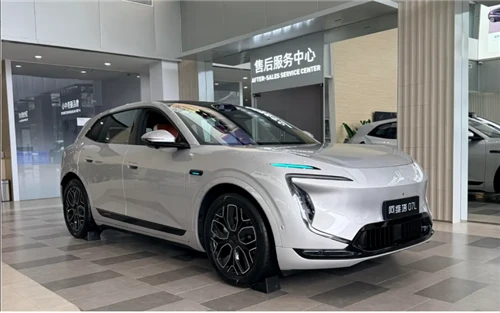
Color and trim matter more than you'd expect in these markets. Buyers want something that looks distinctive. A car that blends into the background doesn't sell. This is one area where Chinese EVs have an advantage the color options tend to be more adventurous than what Japanese or Korean brands offer in the same price bracket.
The Logistics Side
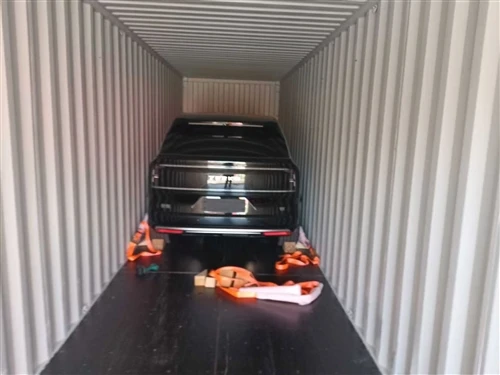
Shanghai port handles most RHD exports to Africa and the Caribbean. For ASEAN destinations, Guangzhou is often the faster option. Ro-Ro is the standard shipping method for volume orders. Container shipping works for one to three units and gives you more control over the schedule.
Booking Ro-Ro space to African ports requires more lead time than you'd expect. The capacity crunch that hit global Ro-Ro shipping in 2026 affects African routes too. If you're planning a shipment for Q1 2027, start talking to freight forwarders now.
Five Things I'd Tell a Friend
- Never buy a converted RHD vehicle. The regulatory environment in 2026 makes it a losing proposition. Factory RHD or nothing.
- Start the certification process before you order the car. NRCS approval in South Africa and KEBS approval in Kenya both take months. The car sitting at port while paperwork catches up is money burning.
- Get a battery condition report before shipment. Carriers classify lithium batteries as green, yellow, or red. A red classification means extra handling fees and paperwork that can delay your shipment by weeks.
- Confirm the charging standard. Type 2 is the norm in most RHD markets but verify before you commit.
- Start with a small order. Two or three units gives you real-world data on demand, registration speed, and customer feedback. Scale up after you've confirmed the process works.
The Window Is Open
Chinese factory-RHD EVs are still relatively new to most African and Caribbean markets. The brands that are moving fastest think the ones that already have dealer networks in place are building market share now. If you're waiting for the market to "mature," you're waiting for your competitors to establish the beachhead.
The product is ready. The compliance pathway exists. The only question is whether you move before someone else does.
FAQ
Q: Why is a factory-original right-hand drive EV better than a converted one?
A: A factory RHD vehicle is designed and validated as RHD from the start. Converted vehicles must meet China's 2026 MIIT export standards for licensed facilities and OEM-approved kits. Informal conversion shops cannot legally export under those rules.
Q: What certifications are required to import a right-hand drive EV into South Africa?
A: You need three approvals. First, an ITAC import permit. Second, an NRCS Letter of Authority or type approval. Third, NATIS registration recognition. Without all three, the vehicle cannot be cleared or registered.
Q: How does the Dongfeng Nammi BOX 01 300KM E2 Right Hand Drive handle charging in African markets?
A: The Dongfeng Nammi BOX 01 300KM E2 Right Hand Drive supports DC fast charging. Before shipping, confirm the charging connector matches the destination standard. South Africa and Kenya use IEC 62196 Type 2. A mismatch means adapter costs or charging problems.
Q: What is the total tax burden for importing an EV into Tanzania?
A: Tanzania charges 25% import duty on CIF, plus excise duty (10% for engines under 2000cc, 20% above), plus 18% VAT compounded on top. Total tax typically lands between 60% and 95% of CIF value. EVs get a duty break of 0% to 10% depending on the model year.
Q: Can I import a right-hand drive EV into Jamaica?
A: Yes, but Jamaica requires RHD and enforces vehicle age limits. You need BSJ pre-shipment certification. There is no permit system, but the tax load runs 80% to 150% of CIF depending on engine size. Jamaica is one of the simpler RHD markets for small-volume importers.
Q: What should I know about battery shipping for right-hand drive EVs?
A: Carriers classify lithium batteries as green, yellow, or red. A red classification means extra handling fees and paperwork that can delay your shipment by weeks. Always get a battery condition report before shipment.