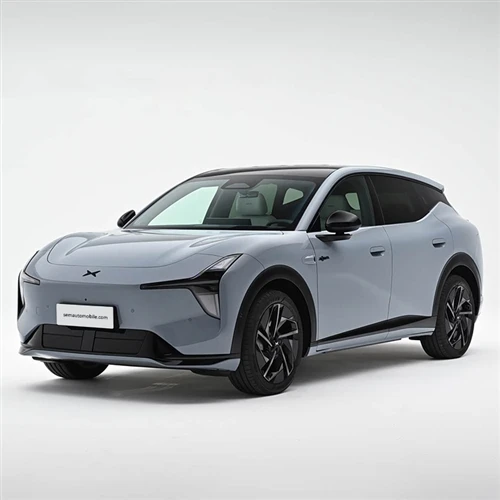
Over the past year, extended-range vehicles equipped with large-capacity batteries have emerged in quick succession. Flagship models such as Volkswagen ID. ERA 9X, Xpeng X9 and Zeekr 9X/8X have launched one after another. The Leapmotor D19 stands out as the most representative of them all. Fitted with an 80 kWh large battery, it delivers a pure electric range of 500 km. Just a few years ago, even many affordable all-electric cars priced at over 100,000 RMB could not achieve such a long driving range.
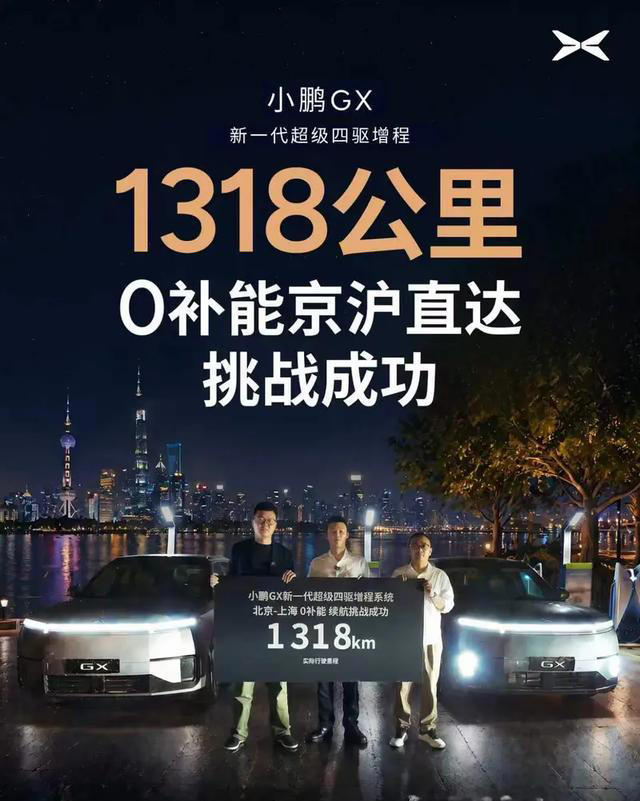
The range test between the Xpeng GX and Li L9 from Beijing to Shanghai proves that extended-range EVs with large batteries are the optimal solution.
It's worth noting that extended-range vehicles are also fitted with large fuel tanks. Combining long pure electric range and ample fuel capacity enables a total range of over 1,000 kilometers. Some may doubt such figures are just marketing hype, so let's take a look at the real-world test results.
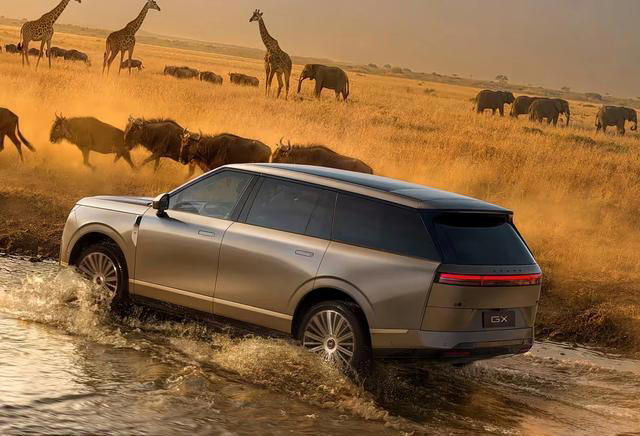
Xpeng GX vs Li L9 Beijing-Shanghai Range Challenge: Large-Battery Extended-Range EVs Are the Optimal Choice
Xpeng GX extended-range version and Li L9 recently completed a real-world range test traveling from Beijing to Shanghai. The results clearly show that the extended-range architecture with a large-capacity battery delivers impressively low energy consumption.
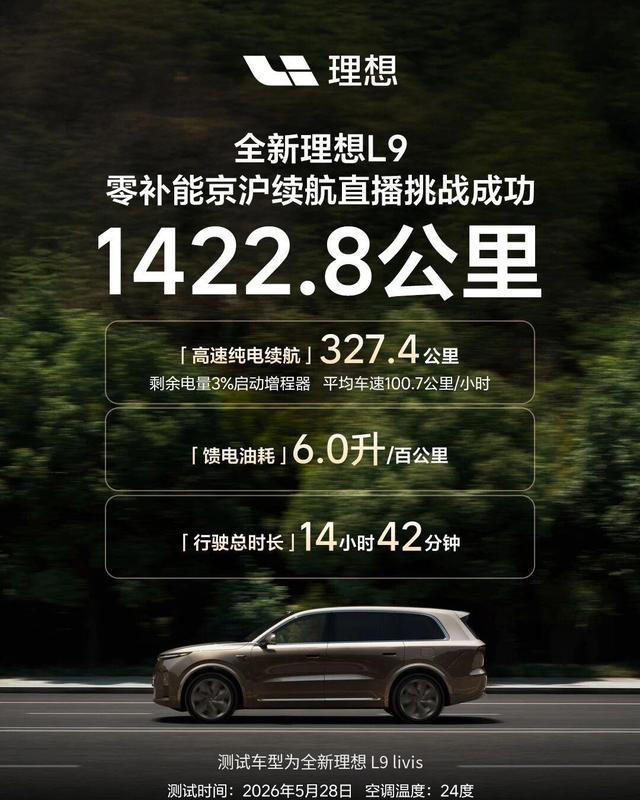
Let's take a closer look at the data from this cross-city long-distance drive. This classic route is dominated by highway cruising, a harsh test for the energy efficiency of hybrid setups. The Xpeng GX covered 1,317.4 kilometers and arrived with 2% battery remaining. The Li L9 performed even better, traveling 1,422.8 kilometers and also ending the trip with 2% charge left.
Energy Consumption Data
Record Time: 2026/5/29 00:03 | 245 words | Uncategorized
Xpeng GX Extended-Range (CLTC Rated Range: 1585 km)
Beijing–Shanghai Tested Range: 1317.4 km (2% battery remaining on arrival)
Pure Electric Range: 354.8 km (average speed: 76 km/h)
Charge-Sustaining Range: 962.6 km (average speed: 88.3 km/h)
Charge-Sustaining Fuel Consumption: 6.48 L/100 km
Overall Average Speed: 84.4 km/h
CLTC Range Achievement Rate: 83.1%
Li Auto L9 LIVIS (CLTC Rated Range: 1650 km)
Beijing–Shanghai Tested Range: 1422.8 km (2% battery remaining on arrival)
Pure Electric Range: 327.4 km (average speed: 100.7 km/h)
Charge-Sustaining Range: 1095.4 km (average speed: 90.1 km/h)
Charge-Sustaining Fuel Consumption: 6.0 L/100 km
Overall Average Speed: 91.8 km/h
CLTC Range Achievement Rate: 86.2%
The Beijing-to-Shanghai range challenge between the Xpeng GX and Li Auto L9 proves that large-battery extended-range EVs are the optimal solution.
Both vehicles started the journey running purely on electricity. The Xpeng GX covered 354.8 km in pure-electric mode, while the Li Auto L9 achieved 327.4 km. For the remaining distance, both switched to charge-sustaining mode, relying on the engine to power the vehicle. The Xpeng GX traveled 962.6 km in charge-sustaining mode at an average speed of 88.3 km/h, with a fuel consumption of 6.48 L/100 km. The Li Auto L9 ran over 1095 km in charge-sustaining mode at an average speed of 90.1 km/h, maintaining a fuel consumption of 6.0 L/100 km. Both models exceeded an 83% CLTC range achievement rate, with the Li Auto L9 reaching an impressive 86.2%. For mid-to-large SUVs weighing over two tons, achieving such low fuel consumption on a fully loaded highway trip is a standout performance in the hybrid segment.
During the test, the Li Auto L9 carried four passengers plus 50 kg of equipment, with the air conditioning set to 24°C in automatic mode. Delivering such efficiency under these conditions is truly remarkable-proof of just how advanced modern extended-range technology has become.
The Xpeng GX, meanwhile, completed its test fully loaded and in heavy rain, with notarization personnel accompanying the entire journey, putting to rest any doubts about data authenticity.
The Beijing-to-Shanghai range challenge between the Xpeng GX and Li Auto L9 proves that large-battery extended-range EVs are the optimal solution.
Some people who don't own cars might complain that the average speed in these tests is too low, but the reality is far from it. The Xpeng GX ran in heavy rain, which naturally kept its average speed slightly lower, while the Li Auto L9 maintained an average speed of over 90 km/h. Considering the length of the route, plus stops for rest, traffic jams, and tunnel speed limits of 80 km/h, this average speed means both cars were essentially cruising at or near the legal limits the entire way.
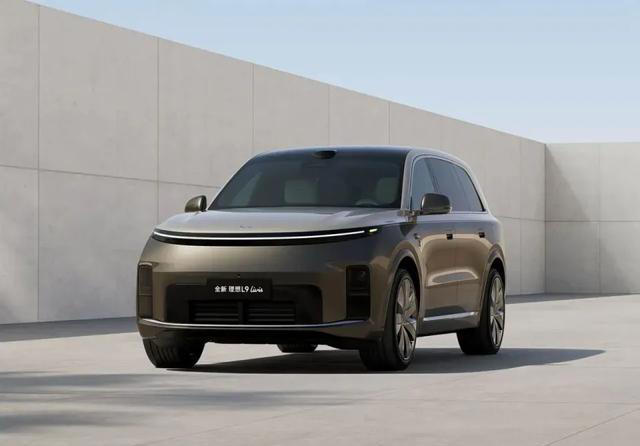
Critics have long dismissed extended-range technology as redundant, claiming it suffers from high energy consumption in charge-sustaining mode and can't compete with multi-speed plug-in hybrids. But look at these results now-are these figures high? These two tests perfectly showcase the full potential of large-battery extended-range systems: strong pure-electric range, smooth driving experience, and exceptional overall range.
The Beijing-to-Shanghai range challenge between the Xpeng GX and Li Auto L9 proves that large-battery extended-range EVs are the optimal solution.
When it comes to the real-world needs of everyday car buyers, most drivers use their vehicles in just two scenarios: 90% of the time for short urban commutes, and the remaining 10% for long-distance trips during holidays. Large-battery extended-range systems handle both perfectly: in the city, running on electricity saves money and delivers a quiet ride; on long trip, using gasoline eliminates any range anxiety.
This thousand-kilometer real-world test from Beijing to Shanghai is the ultimate touchstone. The impressive results posted by the Li Auto L9 and Xpeng GX directly demonstrate the solid performance of large-battery extended-range technology. From a full-scenario usage perspective, it is currently the best solution for eliminating range anxiety.