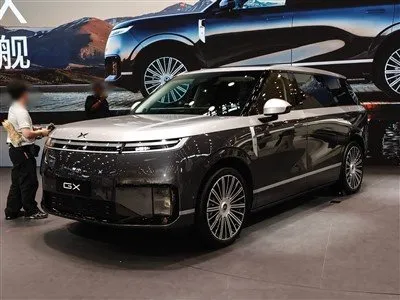
After becoming the world's largest car exporter in the first half of this year, the compliance management of Chinese car companies going overseas has attracted increasing attention from the industry.
According to data recently released by the China Association of Automobile Manufacturers, in the first half of 2023, China exported 2.341 million vehicles, a year-on-year increase of 76.9%, while data from the Japan Automobile Manufacturers Association showed that Japan's automobile exports during the same period were 2.02 million vehicles, a year-on-year increase of 17%. It will officially surpass Japan and become the world's largest car exporter in the first half of 2023.
The reporter of "China Business Daily" learned from Deloitte that regarding the phenomenon of Chinese car companies' accelerating overseas expansion, Deloitte believes: "Although the prospect of overseas expansion is good, since last year, a series of external risks caused by international geopolitical conflicts and international competition in the industry. It has pushed up the compliance risks of Chinese car companies in the process of globalization."
Andreas Herzig, partner in charge of the automotive industry at Deloitte Global Risk Consulting, cited the example of the European market where Chinese car companies have entered: "Compared to other mature markets, Europe has a unique regulatory landscape that reflects each country's history and unique cultural values. , and the ongoing movement towards harmonized regulation and centralized legislation presents challenges for all international companies entering the European market."
"Traditionally, Europe has attached great importance to consumer rights. Recently, EU countries have stepped up their pace at the legislative level to keep up with the development of the rapidly transforming smart car and mobility industries, which means that all OEMs need to re-examine and manage cooperation. Regulatory issues, enhance its strategic height in the enterprise, and avoid regulatory traps that damage corporate profits and brand reputation." Andreas Herzig thinks so.
Under such circumstances, on August 10, Deloitte China formally established the European Compliance Service Center for Automobile Going Overseas. It stated that in order to help Chinese auto companies further expand the European market, Deloitte has gathered all the resources of European members, in data strategy and cooperation. Regulations, supply chain compliance, product and battery compliance, etc., "respectively have expert teams combining China and Europe to provide one-stop services for car companies."
"The European Compliance Service Center for Automobile Going Overseas leverages the abundant resources in Deloitte's global network and more than 300 Deloitte offices in Europe and China to sort out the national conditions in China and Europe, provide pre-services, and accelerate the development of Chinese auto companies. The overseas journey escorts the overseas layout of Chinese brands." Liu Wei, head of the automotive industry at Deloitte China Risk Consulting, said so.
Deloitte believes that in the European market, product compliance and product liability cover the entire journey and touchpoints of the user life cycle in the automotive industry, and efforts should be made to meet all regulatory requirements in order to promote specific products to individual markets. For example, the European Commission promulgated the "New Battery Act" in July this year, aiming to make batteries more sustainable throughout their life cycle, specifying requirements for battery sustainability, safety, etc. Businesses and other economic operators are responsible for supply chain due diligence and waste battery recycling.
"Most Chinese automakers with independent brands lack experience in overseas operations. In terms of product compliance overseas, it is urgent to establish a complete compliance governance system and create three lines of defense for compliance management to cope with challenges brought about by changes in the external compliance environment. "Deloitte thinks so.
The reporter noticed that the top-level planning of the auto industry has long paid attention to the compliance management of auto companies going overseas. The "New Energy Automobile Industry Development Plan (2021-2035)" clearly emphasizes: "Improve the service guarantee system such as legal consultation, testing and certification, and talent training. , guide enterprises to standardize their overseas business operations, and improve the level of compliance management.”
"Most of the leading auto companies in the same industry have formulated carbon neutral plans and emission reduction measures to drive the value chain of automobiles to reduce emissions." Deloitte said, "Based on this, Chinese auto companies need to sort out and analyze ESG in overseas markets. Continue relevant regulatory policies and conduct risk assessments, formulate carbon targets, calculate carbon footprints, formulate emission reduction roadmaps and action plans, in order to respond to overseas relevant policy regulation, peer competition pressure, customer needs and consumers' expectations for low-carbon products. "After becoming the world's largest car exporter in the first half of this year, the compliance management of Chinese car companies going overseas has attracted increasing attention from the industry.
According to data recently released by the China Association of Automobile Manufacturers, in the first half of 2023, China exported 2.341 million vehicles, a year-on-year increase of 76.9%, while data from the Japan Automobile Manufacturers Association showed that Japan's automobile exports during the same period were 2.02 million vehicles, a year-on-year increase of 17%. It will officially surpass Japan and become the world's largest car exporter in the first half of 2023.
The reporter of "China Business Daily" learned from Deloitte that regarding the phenomenon of Chinese car companies' accelerating overseas expansion, Deloitte believes: "Although the prospect of overseas expansion is good, since last year, a series of external risks caused by international geopolitical conflicts and international competition in the industry. It has pushed up the compliance risks of Chinese car companies in the process of globalization."
Andreas Herzig, partner in charge of the automotive industry at Deloitte Global Risk Consulting, cited the example of the European market where Chinese car companies have entered: "Compared to other mature markets, Europe has a unique regulatory landscape that reflects each country's history and unique cultural values. , and the ongoing movement towards harmonized regulation and centralized legislation presents challenges for all international companies entering the European market."
"Traditionally, Europe has attached great importance to consumer rights. Recently, EU countries have stepped up their pace at the legislative level to keep up with the development of the rapidly transforming smart car and mobility industries, which means that all OEMs need to re-examine and manage cooperation. Regulatory issues, enhance its strategic height in the enterprise, and avoid regulatory traps that damage corporate profits and brand reputation." Andreas Herzig thinks so.
Under such circumstances, on August 10, Deloitte China formally established the European Compliance Service Center for Automobile Going Overseas. It stated that in order to help Chinese auto companies further expand the European market, Deloitte has gathered all the resources of European members, in data strategy and cooperation. Regulations, supply chain compliance, product and battery compliance, etc., "respectively have expert teams combining China and Europe to provide one-stop services for car companies."
"The European Compliance Service Center for Automobile Going Overseas leverages the abundant resources in Deloitte's global network and more than 300 Deloitte offices in Europe and China to sort out the national conditions in China and Europe, provide pre-services, and accelerate the development of Chinese auto companies. The overseas journey escorts the overseas layout of Chinese brands." Liu Wei, head of the automotive industry at Deloitte China Risk Consulting, said so.
Deloitte believes that in the European market, product compliance and product liability cover the entire journey and touchpoints of the user life cycle in the automotive industry, and efforts should be made to meet all regulatory requirements in order to promote specific products to individual markets. For example, the European Commission promulgated the "New Battery Act" in July this year, aiming to make batteries more sustainable throughout their life cycle, specifying requirements for battery sustainability, safety, etc. Businesses and other economic operators are responsible for supply chain due diligence and waste battery recycling.
"Most Chinese automakers with independent brands lack experience in overseas operations. In terms of product compliance overseas, it is urgent to establish a complete compliance governance system and create three lines of defense for compliance management to cope with challenges brought about by changes in the external compliance environment. "Deloitte thinks so.
The reporter noticed that the top-level planning of the auto industry has long paid attention to the compliance management of auto companies going overseas. The "New Energy Automobile Industry Development Plan (2021-2035)" clearly emphasizes: "Improve the service guarantee system such as legal consultation, testing and certification, and talent training. , guide enterprises to standardize their overseas business operations, and improve the level of compliance management.”
"Most of the leading auto companies in the same industry have formulated carbon neutral plans and emission reduction measures to drive the value chain of automobiles to reduce emissions." Deloitte said, "Based on this, Chinese auto companies need to sort out and analyze ESG in overseas markets. Continue relevant regulatory policies and conduct risk assessments, formulate carbon targets, calculate carbon footprints, formulate emission reduction roadmaps and action plans, in order to respond to overseas relevant policy regulation, peer competition pressure, customer needs and consumers' expectations for low-carbon products. "