Domestic situation
Domestic mode At present, China is at the peak of infrastructure construction of charging stations. The government and enterprises focus on the choice of direct charging or power replacement for professional services of charging stations. The comprehensive services of domestic charging stations have not been developed.
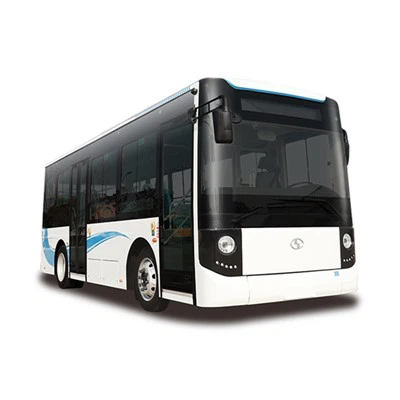
1) Case of successful operation of charging stations: The two largest and most mature charging stations for electric vehicles in China are the Beijing Olympic charging station and the Shanghai World Expo charging station. These two charging stations currently provide rapid battery replacement services for urban electric buses. Currently, neither of the two charging stations is a formal commercial operation, but a pilot operation under the organization of the government. The common point of the two charging stations is that they are both operated under the leadership of local bus groups. The charging stations are established with major national special funds and local funds. The electric buses are operated by bus groups. The power batteries used in Beijing Olympic charging stations are leased from the battery manufacturers, and the battery manufacturers are paid a monthly rental fee (about 4 yuan per kilowatt hour) according to the amount of electricity used, while Shanghai World Expo charging stations directly purchase batteries from the battery manufacturers, At the same time, the battery manufacturer is responsible for the maintenance of the initial battery, and completes the training of relevant technicians. After that, the ownership of the battery belongs to the charging station.
2) At present, the State Grid is accelerating its cooperation with local governments to speed up the construction of charging stations. According to the plan put forward by General Manager Liu Zhenya at the working meeting of State Grid Corporation of China at the beginning of the year, State Grid will establish 75 public charging stations, 6209 AC charging piles and some battery replacement stations in 27 provinces and cities (districts) this year. At present, the announced projects include the establishment of five medium-sized electric vehicle charging stations after the year of cooperation between State Grid Shaanxi Electric Power Company and Xi'an; Chengdu Electric Power Company cooperates with the local government to establish 3 electric vehicle charging stations and 300 charging piles within the year; Hubei Electric Power Company and Yichang City will establish a large charging station and 16 charging piles within the year; Chongqing Electric Power Company and Chongqing cooperated to establish 50 charging piles CNOOC in the year: Putian New Energy Power Co., Ltd. was established jointly with China Putian, specializing in the operation of electric vehicle energy supply network. The joint venture has cooperated with Zotye Automobile and plans to start the network construction of pure electric vehicle charging stations in more than 2 provincial capitals in China. Sinopec: Sinopec announced that it will take Beijing as a breakthrough to enter the charging station industry for the first time. Beijing Petroleum Branch of Sinopec and Beijing Shouke Group Co., Ltd. have jointly funded the establishment of Beijing Sinopec Shouke New Energy Technology Co., Ltd., which will mainly use Sinopec's existing large refueling and gas filling stations to transform them into integrated refueling and charging service stations. Sinopec will take Beijing as a breakthrough to enter the charging station industry, and its comprehensive service station for refueling and charging will eventually expand to the whole city, and then to Hebei, Tianjin and even more. PetroChina: It is said that it has contacted with local government departments and proposed the idea of building an electric vehicle charging station.
3) Charging station investment plan of State Grid Corporation of China: State Grid will vigorously build charging stations and charging piles in three stages. In the first phase (2010), the total investment in the main equipment of the charging station will reach 300 million yuan. 75 charging stations and 6209 charging piles will be built in 27 provincial companies, and the network architecture of electric vehicle charging facilities will be initially built; In the second stage (2011-2015), 14 billion yuan will be invested, and the scale of electric vehicle charging stations will reach 4000. Meanwhile, the construction of charging piles will be vigorously promoted to initially form an electric vehicle charging network; In the third stage (2016-2020), 18 billion yuan will be invested, 10000 electric vehicle charging stations will be set up, supporting construction of charging piles will be carried out simultaneously and comprehensively, and a complete electric vehicle charging network will be built. By 2020, the total investment in the main equipment of the charging station will reach 32 billion yuan. In 2010, the investment scale of the charger, the electric energy monitoring system and the active filter in the main equipment of the charging station will reach 150 million yuan, 20 million yuan and 63 million yuan respectively, and the average annual investment scale in the second phase will rapidly increase to 1.44 billion yuan, 160 million yuan and 672 million yuan. In 2010, the investment scale of charging piles was 160 million yuan, and in 2011-2015, the investment scale of charging piles was 4.5 billion yuan, with an average annual investment of 900 million yuan, five times the average annual investment scale of the first phase. By 2020, the total investment in charging piles will reach 12.5 billion yuan.
Foreign situation
The development of charging piles abroad is relatively mature: the United States, Japan, Israel, France, Britain and other countries have started to build their own electric vehicle charging facilities, mainly charging piles.
(1) The United States has a vast territory, and each state has strong independence. Different states have different ideas about electric vehicles and their charging facilities. California, Virginia and other places have carried out the construction of charging facilities. Among them, California has the largest construction effort, which is jointly built by the "Better Space Project" company and the governments of San Francisco, Auckland, San Jose and other cities in northern California. In 2012, charging piles will be installed in all residential areas, commercial buildings, parking lots and government buildings in the above-mentioned cities, so that electric vehicle drivers can charge their cars at any time. The company will also build battery replacement stations in the above areas to facilitate long-distance drivers to replace batteries at any time. The total investment of the project is planned to reach 1 billion dollars. In addition, SolarCity has built five charging stations on the 101 highway in California. Each charging station can provide 240V, 70A fast charging service, and can fully charge Tesla pure electric vehicle in 3.5h.
(2) As of 2009, Japan has more than 100 charging stations, 60% of which are concentrated in Tokyo. The Japanese government said that in order to popularize electric vehicles, it will build more than 1000 charging stations within three years. Tokyo Electric Power Company of Japan will take the lead in participating in relevant infrastructure construction. In 2010, Tokyo will take the lead in building more than 200 charging stations. It is expected that the number will increase to more than 1000 in three years, and charging piles will be more popular in Tokyo, with buildings everywhere on the roadside. Kanagawa Prefecture, which is close to Tokyo, plans to have at least 3000 electric vehicles on the road within five years, and has promised to provide 150 fast charging stations. The central government of Japan supports this technology and will select cities to pilot electric vehicle charging projects. The project will involve installing power sockets in paid parking lots, supermarkets and restaurant chains for free use by drivers.
(3) In Britain, there are already 60 free car charging posts in the urban area of London. People who drive electric drive cars can easily find charging posts near their homes, offices or busy streets and enjoy the service of charging and parking no matter how many times. They only need to pay 75 pounds a year for management fees.
(4) France In France, electric power enterprises have built many charging stations in cities for electric vehicles, and electric vehicles can also be charged at home. As of 2008, there are more than 10000 various electric vehicles and 200 public charging stations in France. The demonstration applications of electric vehicles are concentrated in municipal, postal, public transport, electricity, sanitation and other public utilities.
(5) On January 21, 2008 in Israel, Renault Nissan Automobile Company, together with ProjectBetterPlace of the United States, signed a memorandum of understanding with the Israeli government, deciding to cooperate in the next three years to jointly promote the market application of pure electric vehicles. According to the cooperation agreement, the Israeli government will be responsible for formulating preferential tax policies for consumers, Renault will be responsible for the supply of electric vehicles, and ProjectBetter has begun to build its own electric vehicle charging facilities, mainly charging piles.
Barriers faced by domestic charging pile industry
(1) The charging current varies from 10 amperes to 100 amperes, which requires high power charging module of charging pile.
(2) The lithium-ion battery used in electric vehicles has strict requirements for overcharge and overdischarge, and the charging device needs to be equipped with a high-precision monitoring system.
(3) At present, the pattern of charging station market dominated by State Grid and China Southern Power Grid has basically taken shape, and new entrants will face high barriers.
The market investment prospect of domestic charging pile industry is broad
(1) Electric vehicles have always been regarded as the development trend of the next generation of vehicles. As the "gas station" of electric vehicles, the comprehensive construction of charging piles will undoubtedly provide a huge market. In the three major cities of Beijing, Shanghai and Guangzhou, due to traffic congestion, car purchase restrictions have been imposed through license plates. However, due to the environmental protection role of electric vehicles, the government supports electric vehicles from the top, so big cities such as Beijing, Shanghai and Guangzhou have relevant policies. Electric vehicles that enter their relevant lists can directly obtain license plates, which has stimulated the demand for electric vehicles from the policy aspect. At the same time, the price of domestic refined oil is rising faster than it is falling, and ultimately the car owners are suffering from higher and higher oil prices. Electric vehicles can replace the consumption of some gasoline and diesel, reducing the cost of this part. There is no doubt that the charging pile is the terminal market promoted by the new energy strategy. If it can seize the opportunity now, it will be of great benefit to the capital profits.
(2) The government's strong support and promotion has stimulated many enterprises' expectations for the charging pile industry. An industry person said that in addition to energy giants such as State Grid, China Southern Power Grid and Sinopec, automobile enterprises and electrical production enterprises are highly motivated. Electric vehicle enterprises such as BYD and BAIC have already started to build universal charging piles, and enterprises in the industry such as XJ Electric and Siemens have also started to develop or invest in the construction of charging stations. According to relevant estimates, the business scale of the charging station is expected to exceed 100 billion yuan annually in the next five years. From the perspective of national actions, the charging infrastructure construction of electric vehicles will break out.
(3) Private capital is eyeing the charging pile market. As electric vehicles need to supplement a large amount of electric energy every day, operating charging stations can obtain huge revenue from charging services. Compared with gas stations, the electric energy is safe and convenient, and a large number of charging stations can be installed in various places. According to the investment scale, it can be operated in a single station or in a network, ranging from community slow charging piles to highway fast charging stations. With regard to the opening of the charging station market, the State Grid may prefer service and power supply more in the future, so that the charging station construction can be more fully integrated with the market, and everyone will be a competitor in the same market. Therefore, it is very important for enterprises engaged in battery production to prepare and plan in advance. In the charge and exchange market, the policy is inclined, the market has potential, and the investment is small, so it will face greater business opportunities.
(4) It will take some time to obtain a relatively considerable income. Now, in addition to Beijing, Tianjin, Shanghai, Hangzhou and other places have issued charging facility construction plans, many local governments have also proposed a new idea of building new residential area supporting charging piles, which can not only alleviate the "mileage anxiety" of electric vehicle users, but also significantly and directly boost the sales of charging pile manufacturers. As an important downstream pillar industry of the new energy vehicle industry chain, the market prospect of charging pile seems quite optimistic. Although the prospect of the industry is generally optimistic, the development of the electric vehicle market is not yet fully mature. Standards, planning and land are three major issues that stand in front of the construction of charging piles, and the construction of a systematic charging pile is not smooth.
Operation strategy of charging pile industry
(1) Sign cooperative station construction and operation management agreements with large real estate enterprises, commercial chain organizations, roadside parking management units designated by the Traffic Management Bureau, and other management units with parking spaces (the investor is responsible for putting charging stations and management, the organization is responsible for providing sites and ensuring safety, and charging and value-added benefits are shared by both parties).
(2) Cooperate with relevant government departments (Science and Technology Commission, Science and Technology Association, Urban Construction, Urban Management, Electric Vehicle Leading Group, Economic Commission, Development and Reform Commission, etc.) or apply for financial assistance (disguised policy support).
(3) Joint venture with local departments of State Grid.
(4) Joint venture with local branches of large powerful enterprises (PetroChina, Sinopec, Fund, etc.).